
Sacred Sound Traditions of the Americas
Drum, Breath, and Voice Across Two Continents
A Hemisphere of Sound
From the Arctic Circle to the southern tip of the Andes, the Americas hold an immense range of sacred sound traditions — shaped by Indigenous nations whose ceremonies predate colonization by thousands of years, and by the peoples later brought to these continents by force, who carried their own sacred music with them and remade it under conditions no tradition should have had to survive.
What emerges across this hemisphere is not a single lineage but a layered one — drum traditions that mark the seasons and the dead, breath-based instruments built for high mountain air, and devotional music born from displacement and grief that transformed into some of the most resilient sacred sound in the world.
This page offers an entry point into that range — a few of the traditions that will each, in time, receive their own deeper exploration within the Sacred Syllable.
Powwow, The Heartbeat Drum
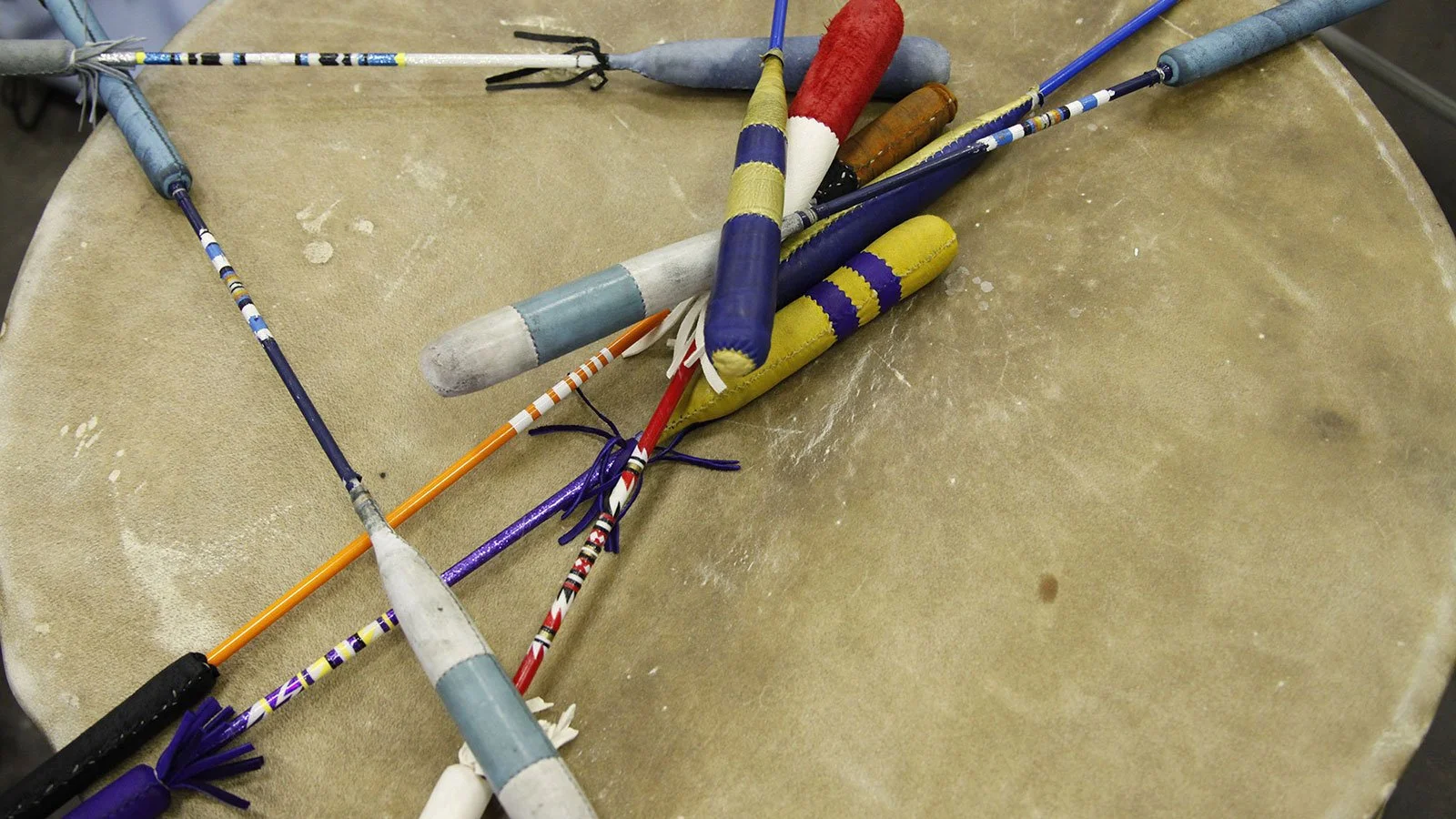
Across North America, the powwow drum stands at the center of one of the continent's most widely practiced living traditions. A large drum, often built by hand and blessed before its first use, is played communally by a seated drum group — most often five to eight singers striking together in unison, their voices rising in high, open tones above the beat.
The drum itself is frequently described as the heartbeat, and its steady pulse is understood to carry prayer as much as rhythm. Powwow singing follows distinct song families — Northern style, sung in a higher register with a driving beat, and Southern style, generally slower and lower in pitch — each with its own honor songs, grass dance songs, and intertribal songs sung in specific ceremonial contexts. Though rooted in specific nations' ceremonial practices, the modern powwow itself grew into an intertribal gathering space over the twentieth century, becoming a place where songs, drum styles, and regalia from many different Native nations meet.
Katajjaq, Inuit Throat Singing
In the Arctic regions of what is now Canada and Greenland, Inuit throat singing — katajjaq — developed as a vocal game traditionally performed by two women standing close together, face to face. One singer leads with a short rhythmic pattern; the other responds, echoing and layering just behind, the two voices interlocking into a rapid, breathy, percussive texture built almost entirely from inhaled and exhaled sound rather than melody in the conventional sense.
The performance is also a contest of endurance and control — the game traditionally ends when one singer runs out of breath, laughs, or loses the pattern. Long suppressed under colonial and missionary pressure through much of the twentieth century, katajjaq has undergone a significant revival in recent decades, carried forward by Inuit artists determined to keep the practice, and the specific breath and body it requires, alive.
Siku, The Breath of the Andes
High in the Andes Mountains of Peru and Bolivia, sacred sound has long been built from breath and altitude. The siku, a panpipe made of hollow cane tubes bound in rows, is traditionally played in pairs — one musician holding half the scale, a second holding the complementary half, the two interlocking their notes together in a call-and-response technique known as ira and arka. No single player carries the full melody alone; the music exists only in the space between two people breathing in coordination.
Alongside the siku, instruments like the quena, an end-blown flute, and the charango, a small stringed instrument traditionally built from an armadillo shell, accompany ceremonies tied to the agricultural calendar, offerings to Pachamama (Mother Earth), and communal fiestas that have continued, largely unbroken, since long before Spanish colonization reshaped the region.
Vodou and the Spirit of the Lwa
In Haiti, Vodou developed as a devotional tradition rooted in West and Central African spiritual practice, reshaped and rebuilt by enslaved peoples under conditions of extraordinary violence, and layered with Catholic imagery used partly as protective disguise. At its center are the lwa — spirits who are invited, through drumming, song, and dance, to descend and move within a devotee during ceremony.
Vodou drumming is built around a family of hand-carved drums played in ensemble, each carrying specific rhythms tied to specific lwa and specific ceremonies. The drumming does not merely accompany the ritual; within Vodou cosmology, it is the rhythm itself that opens the door between worlds, calling the spirits into the circle of the living.
Batá and the Voice of Santería
In Cuba, the arrival of enslaved Yoruba peoples gave rise to Santería (also called Lucumí), a devotional tradition that preserved Yoruba praise song and devotion to the Orisha while adopting the outward imagery of Catholic saints as cover under colonial religious suppression. At the heart of its ceremony are the batá — a set of three double-headed, hourglass-shaped sacred drums of graduated size, each played by a specially trained and ritually consecrated drummer.
The batá are considered too sacred for casual performance; each drum is believed to house its own spirit, and the specific rhythms played for each Orisha are understood as a form of direct address, summoning that Orisha into ceremony through sound alone. Where the Africa collection traces this tradition to its Yoruba roots, this is its story on Cuban soil — a devotional language that crossed an ocean in memory and rebuilt itself, drum by drum, in exile.
Spirituals, The Sound of Survival
Among enslaved African Americans in the United States, sacred song became one of the few forms of expression that could not be fully taken away. Spirituals — deeply rooted in West African call-and-response singing traditions and reshaped through the language of the Bible — carried grief, endurance, coded messages of escape, and unshakable faith, often within the same verse.
Songs such as "Wade in the Water" and "Swing Low, Sweet Chariot" functioned on more than one level at once: devotional on the surface, and for some, understood to carry practical guidance for those seeking freedom along the Underground Railroad. This tradition became the direct root of gospel music, and through gospel, of blues, soul, and much of American popular music that followed — sacred sound that did not simply survive an unimaginable history, but shaped the sound of an entire nation afterward.
Sound Across Two Continents
What connects the powwow drum, Inuit throat song, Andean panpipes, Vodou ceremony, batá drumming, and the spiritual is not shared style but shared purpose: sound as a way of holding what could not otherwise be held — prayer, memory, grief, and survival, carried forward when so much else was taken.
Within the Sacred Syllable, these traditions are honored individually and in depth as this collection continues to grow — each one distinct, each one carrying its own history, language, and relationship to the sacred.